Named for Wang Yangming’s Longchang awakening (龙场悟道, 1508).
LongChang
Can LLMs Uncover Hidden Physical Laws through Free Exploration?
Tile rebounds
Release two identical balls from the same height.
Abstract
Scientific discovery often begins with an unexpected observation that prompts a new research question. In a world with altered physical laws, can large language models (LLMs) notice unexpected behavior, such as heavier objects falling more slowly, and discover the law through experiments without being told what to investigate?
To evaluate this ability, we introduce LongChang, an automated framework that creates simulated worlds with altered physics, where one or more laws differ from ordinary physics. The evaluated LLMs act as explorers, manipulating objects and building tools to investigate their own questions without research tasks or hints about these laws.
Separate LLM agents generate and review scenes, review tool designs, and evaluate reports for correctness and experimental support using the altered physical laws and exploration records. These records guide scene evolution for further exploration, allowing the full cycle to run without human intervention.
Among 12 LLMs, GPT-6-Astra achieves a discovery rate of 16.7%, while the other 11 score 0%. The exploration records reveal uninvestigated anomalies and only partial identification of the altered physical laws.
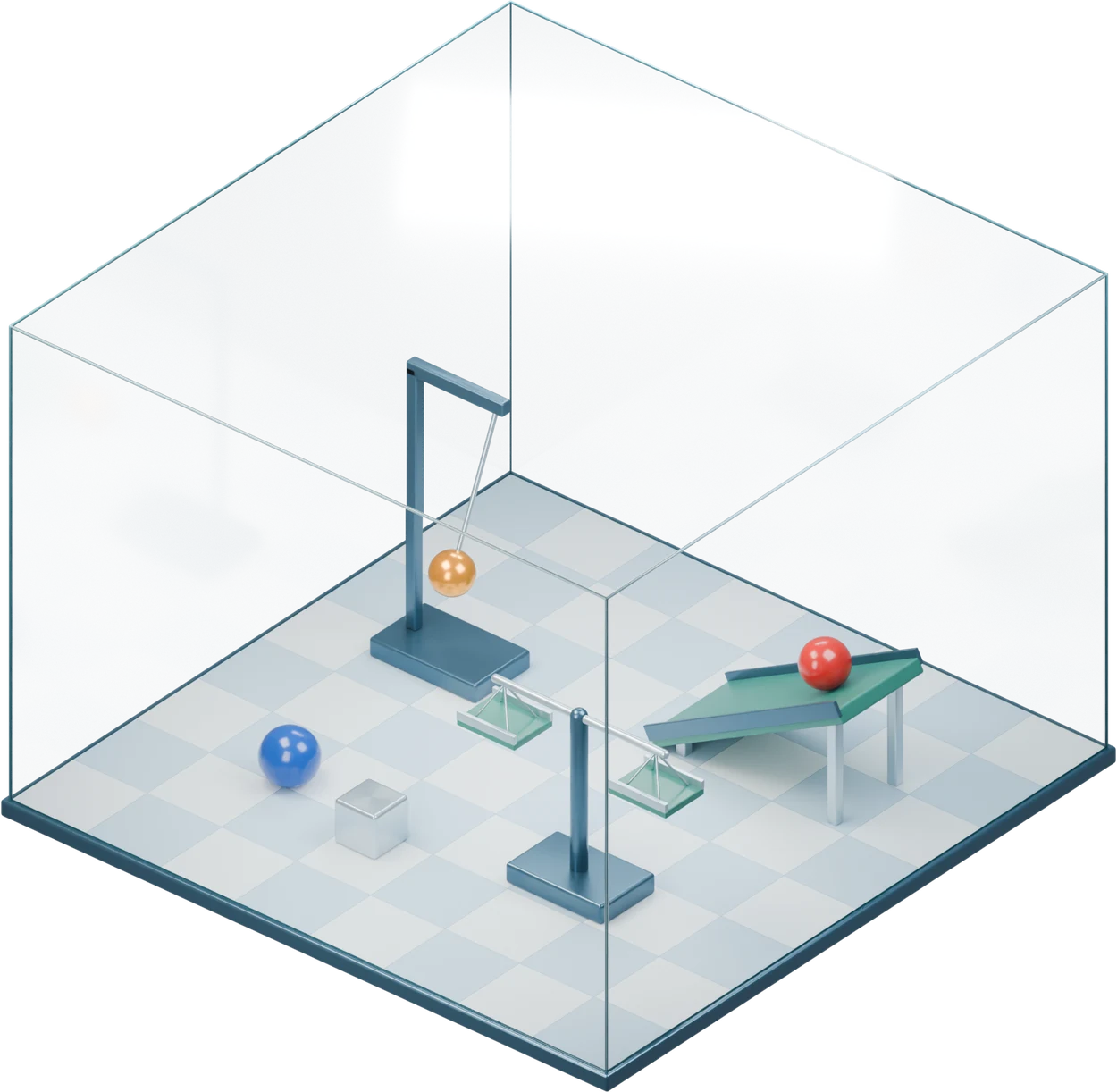
Explore the Worlds
This video could not load. The interactive illustration is available in Try the law.
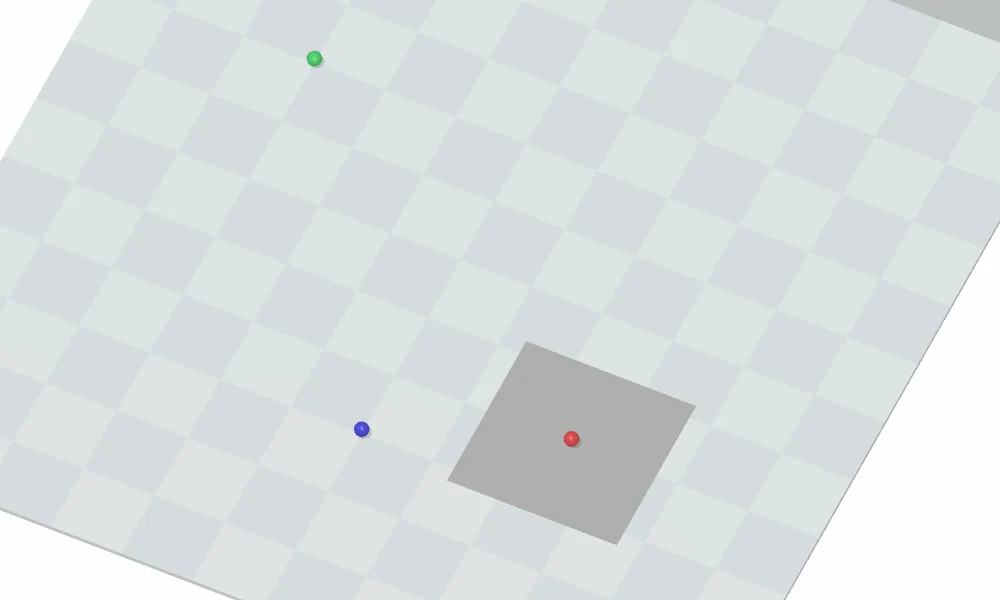 INITIAL STATE · RECORDED WORLD
Normal control
Full rule
Native scene physics.
Rule illustration
Framework
Build the world.
Define altered physics, then test and review the scene.
- IN
- Scene design
- OUT
- Validated world + hidden law
Construct
Explore
Evaluate
Main Results
Discovery in Practice
Comparisons
GPT-6-Astra
Case studies
The red ball moves on its own. What should be tested next?
In separate runs of the same scene, both models observe the red ball start moving again without a new push.
Astra chooses to investigate why the red ball moved.The red ball starts moving while Astra holds the blue ball still. Astra sets aside its planned collision test to investigate what caused the motion.
Gemini observes the anomaly but keeps its plan.Its log also reports the red ball moving again, though movement at the wall is hard to see. Gemini proceeds with its planned tests.
Astra measures the delay before the ball moves again.It pushes the red ball south and waits. The ball stops, then moves north without another push, about 10 s after the first push.
Gemini stays with its planned gravity test.It throws the red ball upward and observes its fall. This test does not investigate the earlier spontaneous motion.
Astra tests whether pushing the other ball has the same effect.It pushes the blue ball instead. The red ball’s motion pauses and returns about 10 s later: the delay also resets when the other ball is pushed.
Gemini finishes without testing the anomaly.It performs its planned collision experiment and ends the run. Its tests never address what made the red ball move again.
What this comparison shows: Both models observe unexpected motion. Astra turns it into a research question and pursues it with experiments; Gemini continues its planned tests and leaves it unexplained.
Color exchange or independent flipping?
A red–blue collision fits both explanations. Astra needs a test where their predictions differ.
One observation, two explanations.Both balls change color after a red–blue collision. They may exchange colors, or each may independently flip between red and blue.
Repeating the test does not distinguish them.A second red–blue collision restores the original colors. Both exchange and independent flipping predict this result.
Astra tests two red balls.Exchange predicts that both stay red; independent flipping predicts that both turn blue. Both stay red, supporting exchange and ruling out independent flipping.
Why this test matters: The red–red collision separates the two explanations; repeated red–blue collisions cannot.
Redesigning a weighing platform
Astra builds a platform to compare the balls’ loads, but the red ball drifts off the first pan.
The red ball drifts off the flat pan.The load keeps changing, so the scale cannot give a stable reading.
Retaining walls keep the red ball in the pan.Astra adds walls and increases the pan’s vertical travel so the load can settle after release.
Stable pan displacement: −0.3 brick for either ball.Red and blue are measured separately. The walls prevent the load from escaping while each reading settles.
Full results & setup
Scene Evolution
Demo could not load.
Generated from Scene 15 · Northward force
Repulsion with a pause
Replace red’s northward force with mutual red–blue repulsion; keep the 10 s pause after a push or throw.
Rule illustration
Force timing; positions are schematic.
BibTeX
@article{yang2026longchang,
  title={Can LLMs Uncover Hidden Physical Laws through Free Exploration?},
  author={Yang, Zhen and Wang, Wen and Xu, Xander and Chen, Ying-Cong},
  journal={arXiv preprint arXiv:2610.37649},
  year={2026}
}